BT Advisor UI
Designing BT’s advisor workspace for live-call efficiency
Introduction
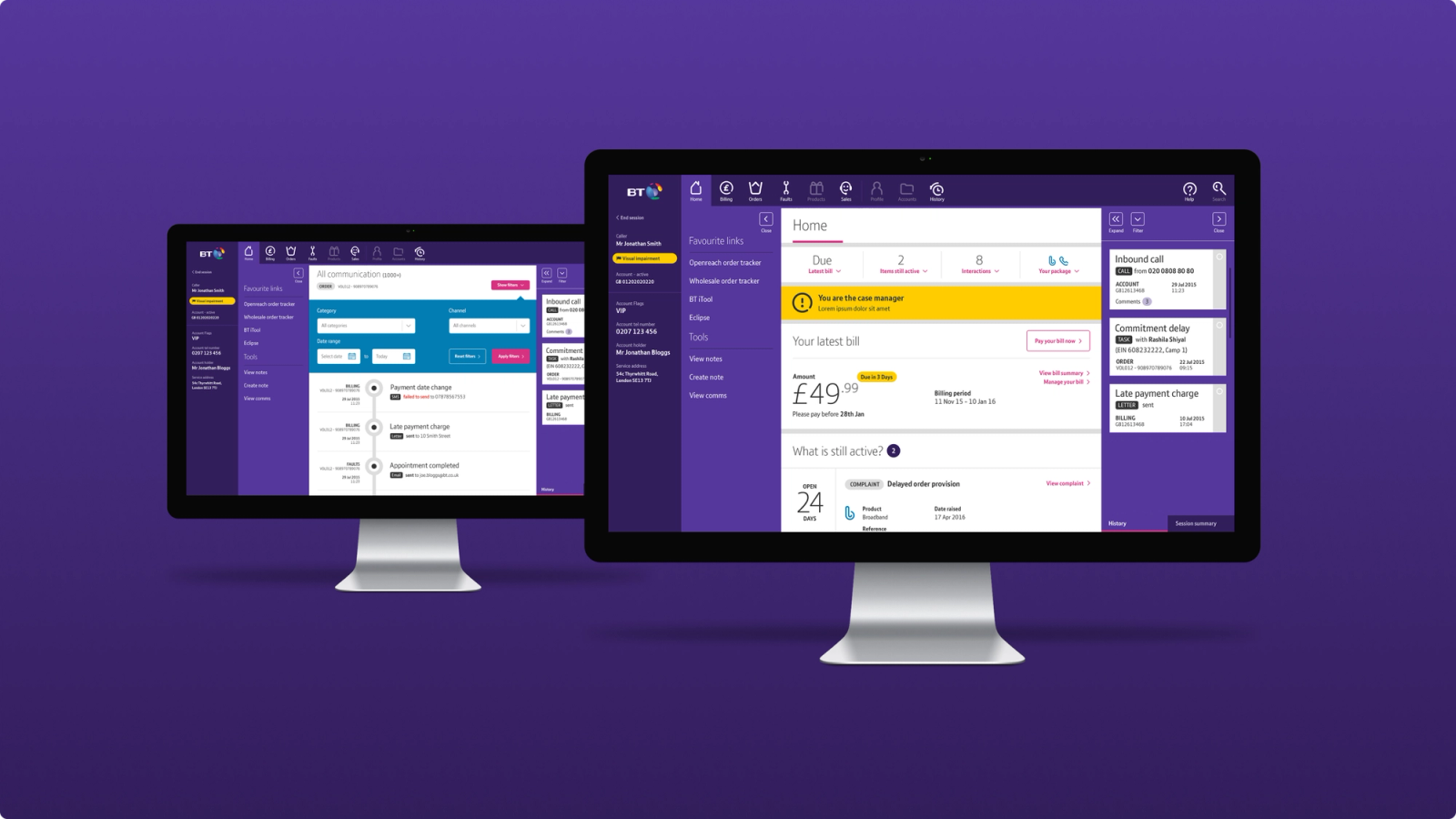
BT consolidated a fragmented ecosystem of internal advisor tools into a single web-based platform used by call centre teams during live customer interactions. Billing, orders, faults and case management were unified within one structured environment.
Advisor.com was a desktop enterprise system deployed on standardised hardware, where advisors frequently resized application windows while working across multiple internal systems mid-call.
My role
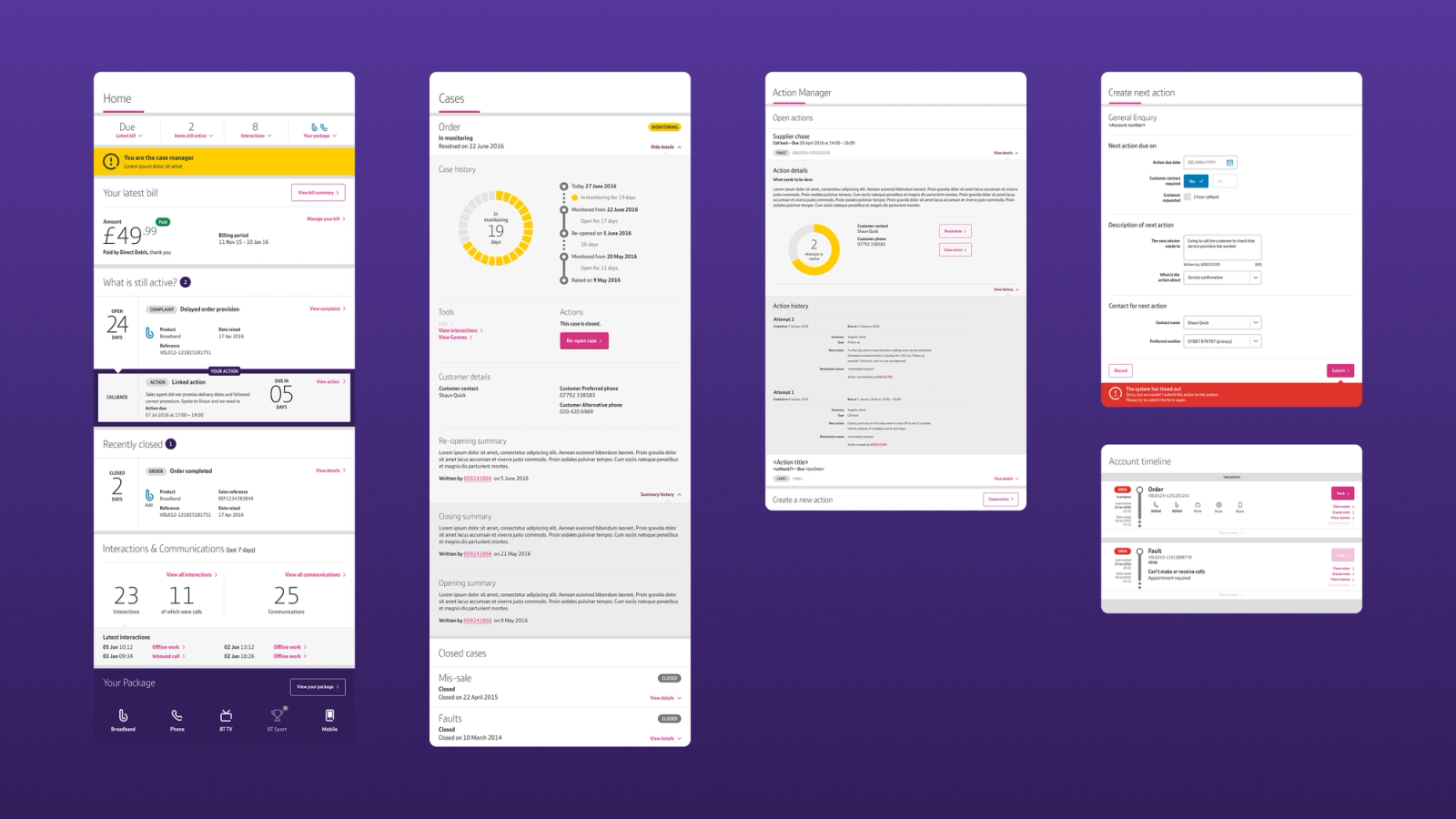
As Senior Visual Designer within the advisor.com squad, I was responsible for formalising the structural layout of the global advisor interface and producing high-fidelity UI for key operational modules, including Case Management and Account History.
My ownership focused on establishing the spatial layout model of the global container, defining persistent customer context patterns and standardising shared action zones. I translated functional requirements into production-ready visual structures and created annotated layout specifications for engineering. I worked within a predefined functional framework alongside UX, Business Analysis and engineering leads.
Designing for live operational pressure
Advisors operate in real time while speaking to customers, requiring an interface that reduces reorientation cost and supports rapid information retrieval.
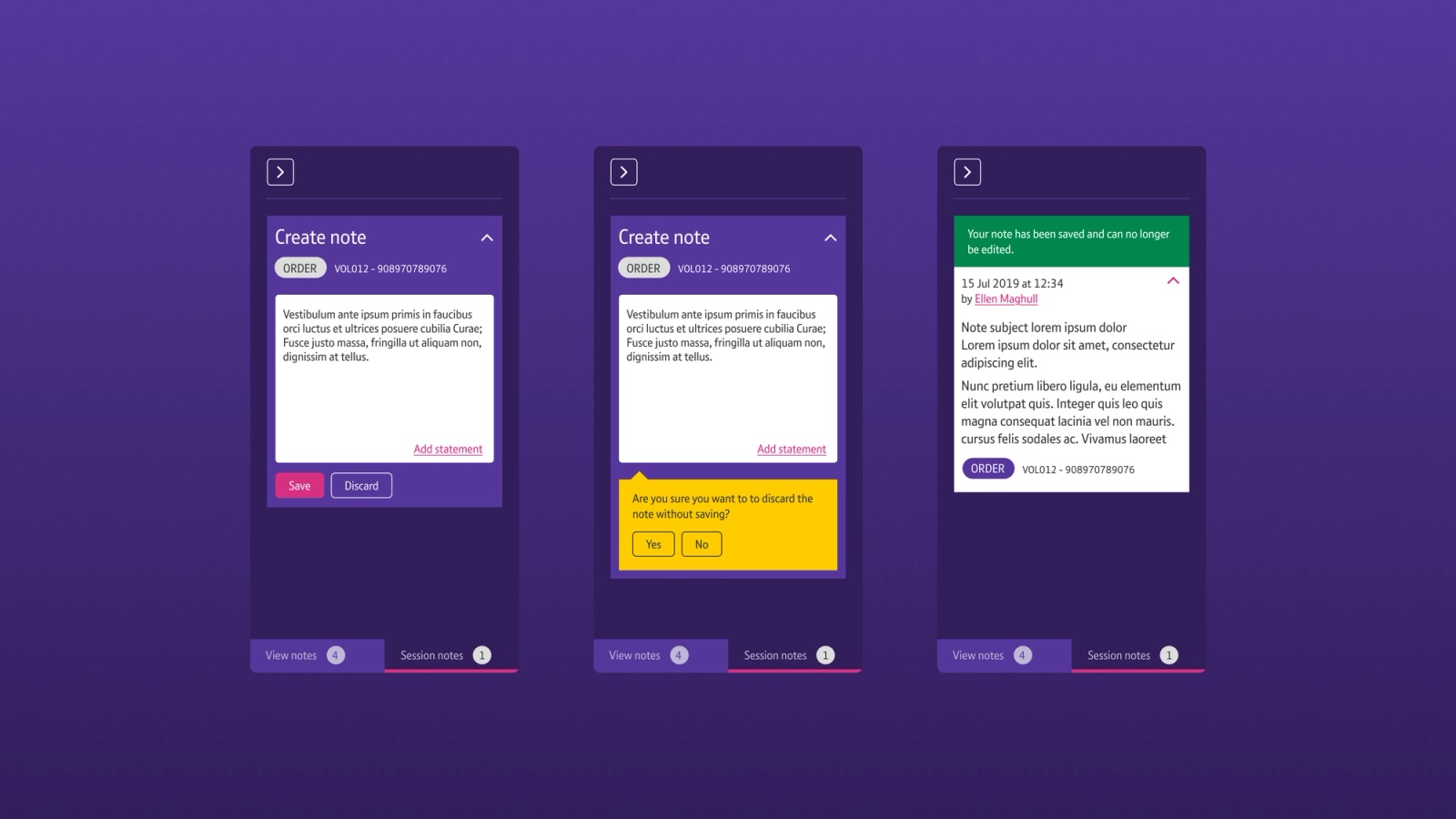
The design prioritised preserving customer identity and account health visibility at all times, while maintaining spatial consistency when switching between service areas. To ensure stability when the application window was resized, the solution was built around persistent context and predictable interface zones. Core customer information remained fixed, while service modules loaded within a controlled workspace area. Shared tools such as notes and case actions followed consistent placement across modules.
The emphasis was structural predictability and cognitive stability within a known desktop environment.
Structuring complex data
Enterprise systems surface high volumes of historical data that are difficult to scan during live calls.
For the Account History module, chronological entries were restructured into a vertical event stream with clear visual grouping. Hierarchy, typographic contrast and spacing were used to surface meaningful activity while reducing visual noise. Within Case Management, status indicators and ageing signals compressed time-based information into immediate visual cues, and action placement was standardised to minimise search effort.
These refinements were aimed at reducing cognitive load and enabling faster decision-making under pressure.
Outcome
Advisor.com became the primary working interface for BT’s call centre teams. As part of the wider transformation programme, the redesign contributed to measurable improvements in operational efficiency, including a 17% reduction in average call handling time and a 10% reduction in task completion time, alongside increased engagement with customer self-service tools.